EU flight delay compensation and your cancellation rights
If your flight was delayed 3 or more hours, cancelled on short notice, or overbooked, you may be owed 250 to 600 euro per passenger under EU261, unless the airline proves an extraordinary circumstance. The right covers flights leaving the EU or UK and EU or UK airlines flying in. The fastest way to check and claim without fighting the airline is Compensair, which is free to check and works on a no-win-no-fee basis. Rules verified August 9, 2026.
EU Regulation 261/2004 (mirrored by the UK as UK261 after Brexit) gives air passengers real cash rights when a flight goes wrong. Most travelers never claim, either because they do not know the rules or find the airline process painful. Here is exactly who qualifies, how much is owed, and how to claim.
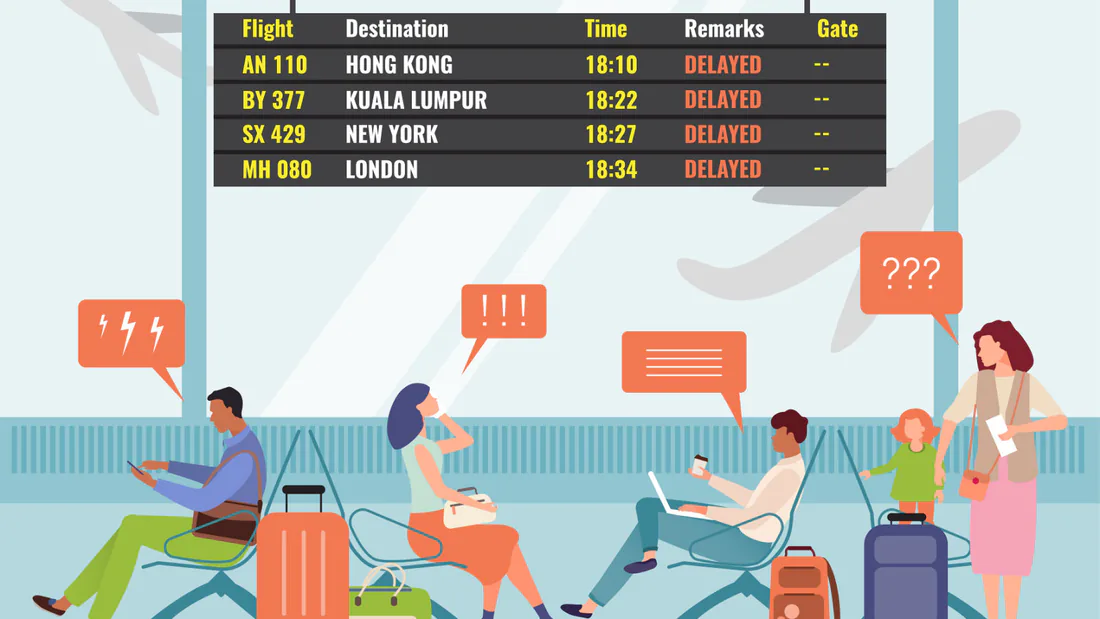
EU 261 compensation table: how much you can claim
| Flight distance | Compensation per passenger | Example route |
|---|---|---|
| Up to 1,500 km | 250 euro | London to Rome |
| Over 1,500 km, both airports inside the EU | 400 euro | Madrid to Helsinki |
| 1,500 to 3,500 km, leaving or entering the EU | 400 euro | Paris to Cairo |
| Over 3,500 km, leaving or entering the EU | 600 euro | London to New York |
The amounts above are per passenger, not per booking, and they apply when your arrival is delayed three hours or more. Distance is measured by the great circle route method for the whole journey to your last destination, not the single delayed leg. Note the middle row: where both airports are inside the EU, 400 euro is the ceiling however long the flight, so an intra-EU route of 4,000 km still pays 400 and not 600. These figures are retained in the 2026 reform adopted in July, described below.
Who qualifies
- Delay: you reached your final destination 3 or more hours late.
- Cancellation: the airline told you less than 14 days before departure.
- Denied boarding: you were bumped from an overbooked flight against your will.
- Route: the flight departed the EU or UK, or was an EU or UK airline arriving in the EU or UK.
- No extraordinary circumstances: the cause was within the airline’s control (a technical fault or crew shortage usually counts; severe weather or a strike by air traffic control usually does not).
Claim it: our pick

Our pick to claim: Compensair
No-win-no-fee EU261 / UK261 claim service
No win, no fee
Compensair checks your flight for free and, if you qualify, handles the whole claim with the airline, including paperwork and escalation, so you do not have to argue with the carrier yourself. It works under EU261 and UK261 and you pay nothing unless it wins. Its fee is a success fee of 35 percent of the amount recovered, with an extra 10 percent only if a case needs legal action. Checked August 9, 2026.
Pros
- Free eligibility check and no upfront cost
- Handles all airline paperwork and escalation for you
- Claims up to 600 euro per passenger where eligible
- Rated about 4.5/5 on Trustpilot (attributed, see above)
Cons
- Success fee of 35 percent (plus 10 percent if legal action is needed)
- Some reviewers report payouts can take time
- Only worthwhile if your flight actually qualifies under the rules
Best for: Passengers with a delayed, cancelled or overbooked EU or UK flight who would rather not chase the airline themselves.
Weighing the service itself? Read our full Compensair review, see how it compares to AirHelp on fees, or check whether you need a lawyer to claim.
What you are owed even when compensation is not
Compensation is only one of the rights in the regulation, and travelers routinely give up on the others because an airline told them the delay was extraordinary. Compensation under Article 7 is the payment for the disruption itself. The right to care under Article 9 is separate, and it covers meals and refreshments proportionate to the wait, two phone calls or emails, and hotel accommodation with transfers when the delay runs overnight. Article 8 is separate again and gives you the choice between a refund and re-routing when the disruption is severe enough. So a weather delay that pays no compensation can still leave the airline owing you dinner and a bed. Ask at the desk, keep the receipts if you pay yourself, and claim them back afterwards. Our guide to EC 261/2004 sets out each article.
What to keep before you leave the airport
Claims fail on evidence more often than on eligibility, and the evidence is easiest to collect while you are still standing in the terminal.
- Your booking reference and boarding passes, digital ones included. Screenshot them, because airline apps drop old trips.
- The actual arrival time at your final destination, not the departure delay. The regulation turns on when you arrived.
- Anything the airline said in writing about the cause, including app notifications and SMS messages.
- Receipts for meals, transport and a hotel if you paid for them yourself.
- A photo of the departure board showing the delay, which is the piece people always wish they had.
Time limits for filing are set by each country's own law rather than by the regulation, so a flight from a while back may still qualify. Check the limit that applies where you would file before assuming it is too late.
The 2026 reform: published, applies from 23 October 2027
The rules that apply to claims today are Regulation (EC) 261/2004, which has applied since 2005 and is interpreted by EU court rulings that set the 3-hour delay threshold. The reform of that law finished its passage in July 2026: the European Parliament voted at third reading on 7 July and the Council gave final clearance on 13 July. It was published in the EU Official Journal on 2 October 2026 as Regulation (EU) 2026/2202, and its Article 3 sets two dates: it enters into force on 22 October 2026 but only applies from 23 October 2027. Until then, claims follow the 2004 rules (checked on EUR-Lex on 5 October 2026).
For anyone claiming now, the important part is what did not change. In the published text of Regulation (EU) 2026/2202 the compensation table still reads 250, 400 and 600 euro across the same distance bands, and the trigger is still a delay at arrival of more than three hours. The adopted joint text (PE-CONS 39/1/26 REV 1) mostly adds rights: a ban on cancelling your return seat because you skipped the outbound flight, fares shown with a cabin bag allowance before booking starts, and a duty on the airline to contact you electronically within 96 hours when a journey may qualify. It also trims one: once the reform applies, an airline may cut the 600 euro payment by half if you arrive no more than four hours late. For the full breakdown of the law, including how it reached a rare third-reading conciliation, see our guide to EC 261/2004.
Not sure what you are owed? Try our flight compensation calculator for a quick estimate, or see why flights get delayed and which causes pay.
Compensation by airline
- British Airways delay compensation: UK261, 220 to 520 pounds.
- Lufthansa delay compensation: EU261, 250 to 600 euro, plus care rights.
- Air France delay compensation: EU261, 250 to 600 euro; also covers KLM.
- Qatar Airways delay compensation: EU261/UK261 on EU or UK departures.
- Turkish Airlines delay compensation: EU261 on EU departures.
Frequently asked questions
Am I entitled to EU flight compensation?
You may be if your flight departed from the EU or UK, or was operated by an EU or UK airline arriving there, and you reached your destination 3 or more hours late, it was cancelled with less than 14 days notice, or you were denied boarding. Compensation is not due if the airline proves the disruption was an extraordinary circumstance beyond its control.
How much is EU261 flight compensation?
The amount depends on flight distance: 250 euro for flights up to 1,500 km, 400 euro for flights between 1,500 and 3,500 km or any flight between two EU airports, and 600 euro for flights over 3,500 km leaving or entering the EU. These amounts are per passenger and are kept unchanged in the reform adopted on 13 July 2026. UK claims are paid in pounds at similar bands.
How far back can I claim flight compensation?
It varies by country, and "the UK allows 6 years" is the half-answer most guides give. Six years is the limit for England and Wales under the Limitation Act 1980. Scotland is different: the Prescription and Limitation (Scotland) Act 1973 extinguishes the obligation after five years, so a claim on an Edinburgh or Glasgow departure can expire a year earlier than the same claim in London. France allows five years under Article 2224 of the Code civil, counted from when you knew or should have known the facts. Because the limit depends on where the claim is made, check an old flight rather than assuming it is too late.
Do I still get meals and a hotel if the delay was extraordinary?
Yes. The right to care under Article 9 is separate from compensation under Article 7, so an airline that owes you no payment for a weather delay can still owe meals and refreshments during the wait and a hotel with transfers when it runs overnight. Ask at the desk, and if you pay yourself, keep the receipts and claim them back.
What are extraordinary circumstances?
These are events outside the airline’s normal activity and control, such as severe weather, air traffic control strikes or political instability, which remove the right to compensation. Everyday problems like technical faults, crew shortages or overbooking usually do not count, so many airline refusals on these grounds can still be challenged.
How does Compensair work and what does it cost?
You enter your flight details for a free check. If it qualifies, Compensair pursues the claim with the airline and you pay nothing up front. It keeps a success fee of 35 percent of the amount recovered, with an extra 10 percent only if legal action is required, so you receive the rest with no risk if the claim fails.
This guide explains the rules in plain terms; it is not legal advice, and eligibility depends on your specific flight. Compensation figures and rules were verified on August 9, 2026 against EU sources, and the reform's publication, dates and compensation table were re-checked against the published Regulation (EU) 2026/2202 on EUR-Lex on October 5, 2026.